
Introduction
Manufacturing industries have undergone significant transformation over the past several decades, and one of the most influential developments driving this change is the rise of robotics in industrial production environments. Robotics technology has reshaped how factories operate by improving precision, efficiency, safety, and scalability across production systems.
Modern manufacturing organizations increasingly rely on robotic systems to perform repetitive, complex, and high accuracy tasks that were once handled manually. These systems help companies remain competitive in global markets while meeting growing customer expectations for quality and speed.
The expansion of robotics in manufacturing is not simply a technological upgrade. It represents a shift toward smarter production systems capable of adapting to evolving industry demands and supporting long term operational growth.
Understanding Robotics in Manufacturing
Robotics in manufacturing refers to the use of programmable mechanical systems designed to perform tasks automatically or with minimal human assistance. These robotic systems operate using sensors, controllers, and software instructions that guide movement and decision making.
Industrial robots typically perform activities such as:
- Assembly operations
- Material handling
- Welding processes
- Packaging tasks
- Quality inspection procedures
By handling these responsibilities efficiently, robots support consistent production performance across manufacturing facilities.
Evolution of Robotics in Manufacturing Environments
The use of robotics in manufacturing began with simple automated machines designed to perform repetitive tasks on assembly lines. Over time, technological advancements improved robot flexibility, intelligence, and integration capabilities.
Key stages in robotics development include:
- Introduction of programmable robotic arms
- Expansion of automated assembly line systems
- Integration with digital control technologies
- Adoption of sensor based monitoring capabilities
- Development of collaborative robotic systems
Each stage contributed to making robotics more adaptable and efficient within industrial environments.
Benefits of Robotics Adoption in Manufacturing Industries
Robotics provides several operational advantages that support productivity and long term sustainability in manufacturing organizations.
Major benefits include:
- Increased production speed
- Improved product consistency
- Reduced operational errors
- Enhanced workplace safety
- Lower long term operational costs
These improvements enable manufacturers to meet market demands more effectively.
Improving Production Efficiency Through Robotics
Efficiency is one of the primary reasons manufacturing industries adopt robotic systems. Robots perform repetitive tasks with consistent accuracy and without fatigue.
Efficiency improvements include:
- Faster processing cycles
- Reduced downtime between operations
- Continuous production capability
- Improved workflow coordination
- Better resource utilization
These advantages allow factories to increase output without compromising quality.
Enhancing Workplace Safety With Robotic Systems
Manufacturing environments often involve hazardous tasks such as handling heavy materials, operating high temperature equipment, or working in confined spaces. Robotics helps reduce worker exposure to these risks.
Safety improvements supported by robotics include:
- Reduced exposure to dangerous machinery
- Lower risk of repetitive strain injuries
- Improved monitoring of hazardous environments
- Support for remote operation capabilities
- Better compliance with safety regulations
Safer workplaces contribute to improved employee well being and productivity.
Supporting Product Quality and Precision
Precision is essential for maintaining consistent product standards in manufacturing industries. Robotics ensures accuracy across repetitive operations that require tight tolerances.
Quality improvements include:
- Consistent assembly alignment
- Accurate welding operations
- Reliable inspection procedures
- Reduced material waste
- Improved finishing consistency
Reliable production quality strengthens customer satisfaction and brand reputation.
Role of Robotics in Automotive Manufacturing
The automotive industry has been one of the earliest adopters of robotics technology. Robotic systems support vehicle assembly, painting processes, welding tasks, and material transportation.
Automotive manufacturing benefits include:
- Improved assembly line coordination
- Faster vehicle production cycles
- Enhanced paint application accuracy
- Safer material handling processes
- Reduced production variability
These capabilities support efficient large scale vehicle manufacturing operations.
Robotics in Electronics Manufacturing
Electronics manufacturing requires extremely precise component placement and handling. Robotics helps maintain the accuracy needed for producing advanced electronic devices.
Applications in electronics production include:
- Circuit board assembly
- Micro component placement
- Inspection of delicate components
- Packaging of electronic devices
- Quality verification processes
Precision robotics ensures reliable performance of electronic products.
Role of Collaborative Robots in Modern Factories
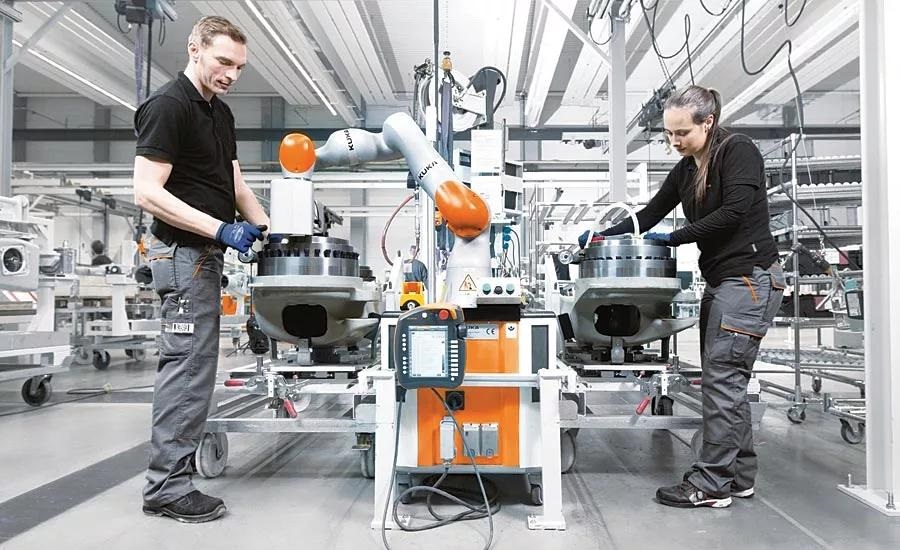
Collaborative robots, often referred to as cobots, are designed to work alongside human workers rather than replacing them entirely. These robots assist employees with tasks that require strength, accuracy, or repetition.
Collaborative robots support:
- Flexible production environments
- Improved worker productivity
- Reduced physical workload
- Faster task completion
- Enhanced operational coordination
Human robot collaboration creates balanced manufacturing systems.
Supporting Flexible Manufacturing Systems
Modern manufacturing industries require flexibility to respond to changing market demands. Robotics allows production systems to adjust quickly to new product designs or variations.
Flexibility benefits include:
- Quick reprogramming for new tasks
- Adaptation to changing production volumes
- Support for customized product manufacturing
- Reduced setup time between operations
- Improved responsiveness to customer needs
Flexible production systems improve competitiveness in dynamic markets.
Integration of Robotics With Digital Manufacturing Technologies
Robotics works closely with digital technologies that support data driven decision making. Integration improves monitoring accuracy and operational coordination across manufacturing facilities.
Digital integration supports:
- Real time performance monitoring
- Predictive maintenance planning
- Automated workflow coordination
- Data based production optimization
- Improved equipment utilization tracking
These capabilities strengthen smart manufacturing environments.
Role of Robotics in Reducing Production Costs
Although robotics requires initial investment, long term cost savings often justify adoption. Automated systems reduce labor intensive processes and improve resource efficiency.
Cost reduction benefits include:
- Lower material waste levels
- Reduced production errors
- Improved energy efficiency
- Decreased downtime
- Increased equipment utilization rates
Efficient operations support sustainable financial performance.
Supporting Supply Chain Reliability Through Robotics
Robotics improves supply chain coordination by supporting faster production cycles and accurate inventory handling processes.
Supply chain improvements include:
- Faster packaging operations
- Reliable inventory movement
- Reduced shipping preparation time
- Improved warehouse coordination
- Better order fulfillment accuracy
Reliable supply chain performance strengthens customer satisfaction.
Challenges Associated With Robotics Implementation
Despite its advantages, robotics adoption presents several challenges that organizations must address carefully.
Common implementation challenges include:
- High initial investment requirements
- Workforce training needs
- Integration complexity with legacy systems
- Maintenance planning requirements
- Adaptation to changing production workflows
Addressing these challenges helps ensure successful robotics deployment.
Workforce Transformation in Robotic Manufacturing Environments
The rise of robotics has changed workforce roles in manufacturing industries. Instead of performing repetitive manual tasks, employees increasingly focus on monitoring systems and managing automated processes.
Workforce transformation includes:
- Development of technical supervision skills
- Increased demand for programming knowledge
- Growth of maintenance support roles
- Expansion of automation management responsibilities
- Improved workplace safety awareness
These changes create opportunities for workforce development.
Role of Robotics in Supporting Sustainable Manufacturing Practices
Sustainability has become a major priority for manufacturing industries worldwide. Robotics contributes to environmentally responsible production strategies.
Sustainability improvements include:
- Reduced material waste
- Improved energy efficiency
- Optimized resource utilization
- Lower defect related production losses
- Support for environmentally responsible operations
Sustainable practices improve long term operational resilience.
Future Trends Shaping Robotics in Manufacturing Industries
Robotics technology continues evolving rapidly as manufacturers adopt advanced automation strategies. Future developments are expected to improve robot intelligence and adaptability further.
Emerging trends include:
- Increased use of sensor based automation systems
- Expansion of collaborative robot adoption
- Integration with intelligent analytics platforms
- Growth of autonomous material handling solutions
- Improved connectivity within smart factory environments
These advancements will continue strengthening manufacturing capabilities.
Conclusion
The rise of robotics in manufacturing industries represents a major shift toward more efficient, precise, and flexible production systems. By improving safety, supporting quality control, and enhancing operational efficiency, robotics has become an essential component of modern industrial environments.
As technology continues advancing, robotics will play an even greater role in shaping the future of manufacturing. Organizations that adopt automation strategies thoughtfully will be better prepared to remain competitive in increasingly complex global markets.
Frequently Asked Questions
How do industrial robots differ from traditional automated machines
Industrial robots are programmable and adaptable systems capable of performing multiple tasks, while traditional automated machines usually perform fixed repetitive operations.
Can robotics improve production performance in small manufacturing facilities
Yes. Scaled robotic systems allow smaller facilities to improve efficiency, reduce errors, and support flexible production strategies.
What industries besides automotive benefit from manufacturing robotics
Industries such as electronics, pharmaceuticals, food processing, aerospace, and packaging benefit significantly from robotic automation technologies.
How long does it typically take to implement robotics in manufacturing operations
Implementation timelines vary depending on system complexity, facility readiness, and integration requirements, but planning and testing phases are essential for successful deployment.
Do robotic systems require frequent maintenance in industrial environments
Robotic systems require scheduled maintenance to ensure reliability, but predictive monitoring technologies help reduce unexpected downtime.
How does robotics support product customization in manufacturing
Programmable robots allow manufacturers to adjust production processes quickly to support different product variations without major equipment changes.
What skills are valuable for workers in robotics supported manufacturing facilities
Skills such as automation monitoring, equipment troubleshooting, programming knowledge, and system coordination are increasingly important in robotic manufacturing environments.
